The 20-minute myth
The visit has been forced to carry the weight of a dozen things that should have been handled before the patient ever walked through the door
Everyone in healthcare talks about the 20-minute visit like it is a law of nature. As if the only way a specialty clinic can function is by slotting patients into rigid time blocks, keeping encounters tight, and hoping the physician can get through everything that matters before the next patient is already waiting. We have optimized this model for decades. We have added scribes, streamlined documentation, redesigned exam room layouts, and trained physicians to be more efficient with their words. And yet the 20-minute visit still feels rushed, still leaves patients with unanswered questions, and still sends physicians home at night with hours of unfinished paperwork.
What if the problem was never the visit itself?
What if the reason the 20-minute encounter feels impossibly short is not that 20 minutes is too little time to care for a patient, but that the visit has been forced to carry the weight of a dozen things that should have been handled before the patient ever walked through the door?
The visit is not the bottleneck
Consider what actually happens during a typical specialty clinic appointment. The patient arrives. The front desk verifies their insurance, often for the second or third time because the information collected during scheduling was incomplete or outdated. They fill out intake forms on a clipboard, duplicating information that already exists somewhere in the system. The medical assistant rooms them and asks a set of screening questions, some of which the patient already answered on the forms they just completed. By the time the physician enters the room, five to ten minutes of the visit have already been consumed by administrative process.
Then the physician sits down and discovers that the referral notes are incomplete, the prior imaging was never uploaded, or the insurance authorization for the procedure they planned to discuss has not been started. Now the visit is not a clinical encounter. It is a triage exercise. The physician is spending their most valuable minutes sorting through logistical gaps instead of focusing on the patient in front of them.
The research confirms this at a striking scale. A landmark AMA study found that physicians spend only 27 percent of their office day on direct patient care. Nearly half their time goes to EHR work and desk tasks. For every hour a physician spends with patients, they spend roughly two additional hours on documentation and administrative work. Primary care physicians log an average of 36 minutes on the EHR for every 30-minute visit. Many take home another one to two hours of paperwork every evening. This is not a time management problem. It is a systems problem. The visit has been asked to absorb the failures of everything that was supposed to happen around it.
Imagine the visit without the friction
Now picture something different. A patient calls your clinic to schedule a follow up. Instead of reaching voicemail or waiting on hold, they are connected immediately. The scheduling is handled in real time. Their insurance is verified automatically before the appointment. Intake information is collected conversationally, days before the visit, through whatever channel the patient prefers. When a referring provider sends records, they are ingested, parsed, and matched to the patient file without anyone on your staff lifting a finger.
The patient arrives on the day of the appointment and everything is ready. Their chart is complete. Their insurance is confirmed. Their intake is done. The referring physician’s notes are in the system. Any pre-visit labs or imaging have been reviewed. The medical assistant rooms the patient and instead of re-collecting information, they confirm what is already there and flag anything the physician should know.
The physician walks in and does something radical: they just practice medicine.
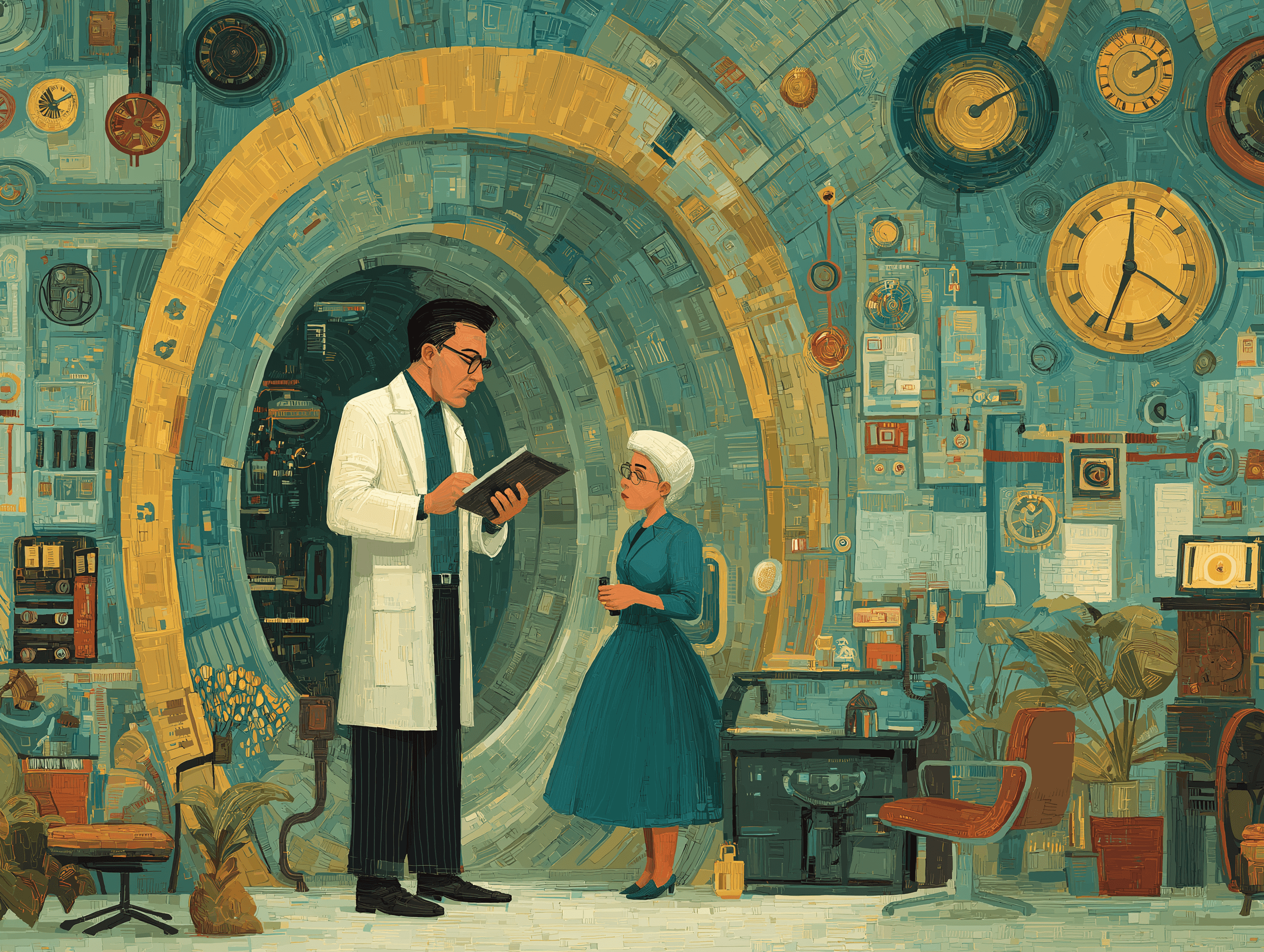
They sit down with a patient whose file is complete, whose concerns are already documented, whose insurance status is settled. They have 20 minutes, and for the first time, all 20 of those minutes belong to the clinical conversation. They can listen. They can explain. They can answer the question the patient was afraid to ask because they thought there would not be enough time. They can discuss the treatment plan thoroughly, make sure the patient understands what comes next, and actually look their patient in the eye instead of typing into a screen.
That is not a fantasy. That is what happens when you remove the administrative friction that has been silently consuming the majority of every clinical encounter for the past two decades.
The ripple effects are enormous
When the visit is liberated from administrative overhead, the entire operating model of a specialty clinic shifts.
Start with the patient experience. The average wait time for a new specialty appointment in the United States has risen to 31 days, up nearly 50 percent since 2004. Gastroenterology is 40 days. Dermatology is over 36. These wait times are not caused by a shortage of physicians alone. They are caused by a system where so much of the clinic’s capacity is consumed by administrative process that there simply are not enough usable appointment slots in the day. When you reclaim the time your team currently spends on phone tag, insurance verification, referral chasing, and data entry, you create real capacity. Not theoretical capacity. Actual open slots that patients can fill.
Then look at physician satisfaction. When doctors are asked what would most effectively reduce burnout, the number one answer is not higher pay or fewer patients. It is less administrative work. Forty-six percent of physicians say reducing administrative burden would be the single most impactful intervention. That makes sense when you consider that the average specialist spends 14 to 18 hours per week on paperwork. Giving physicians back even a fraction of that time changes how the job feels. It reconnects them with the reason they went into medicine in the first place.
And consider the financial impact. A clinic that can see more patients per day without extending hours or adding providers is a fundamentally more productive operation. A clinic where referrals are captured and processed instantly instead of sitting in a fax tray for three days retains revenue that would otherwise leak to competitors. A clinic where no-show rates drop because automated confirmations and follow ups go out reliably, every time, without depending on a staff member remembering to make the call, runs leaner and more profitably.
This is not about replacing the human touch
There is an understandable hesitation when people hear about automating healthcare workflows. The concern is always the same: will the patient feel like they are interacting with a machine instead of a person? It is a fair question, and the answer matters.
The truth is that the most dehumanizing experience in healthcare right now is not technology. It is being put on hold for 15 minutes, being asked to fill out the same form for the third time, having your referral lost in a pile, and finally getting into the exam room only to watch your physician spend half the visit typing into a computer. That is what dehumanizes care. Not the presence of smart systems behind the scenes, but the absence of them.
When the administrative infrastructure works, the human interactions get better. The front desk staff have time to greet patients by name and actually mean it. The medical assistant can have a real conversation during rooming instead of rushing through checkboxes. The physician can be fully present. Patients notice the difference immediately, not because they see the technology, but because they feel the calm.
The clinics that move first set the standard
We are at an inflection point in how specialty practices operate. The tools to eliminate administrative friction from the patient journey now exist. They are not theoretical. They are in production, handling real calls, processing real referrals, verifying real insurance, and syncing everything into real EHR systems at clinics across the country.
Taxo was built for exactly this moment. Our platform handles omnichannel patient communication, intake, scheduling, insurance verification, referral processing, and follow up, all autonomously, all flowing directly into your existing systems. The result is not just efficiency. It is a fundamentally different patient experience and a fundamentally different quality of life for your clinical team.
The 20-minute visit was never the problem. The problem was everything we piled on top of it. Strip that away, and you do not need longer appointments. You need better ones. And better ones are finally possible.
The practices that embrace this now will not just run more smoothly. They will become the places where the best physicians want to work, where patients tell their friends to go, and where the wait list exists because of reputation, not because the phone goes unanswered. That is the future of specialty care. And it is a lot closer than most people think.